A new routine to explain. A friendship to explore. A lesson to bring to life.
Shape a book around what your students need to understand.
Occibo's planned AI classroom storybook maker brings social narratives and
topic-based learning books into one guided workflow. Set the learning goal,
adapt the language, guide the illustrations, and review every page.
Early-access waitlist. Studio access and final printing options are not yet available.
Your classroom. Your story.A learning goal on every page.
Individual studentRoutines, changes & life skills
Group or classShared reading, belonging & empathy
Class topicLearning, imagination & discovery
Three book types. Start with who or what matters.
Occibo's planned teacher experience begins with a simple choice:
an Individual student, a Group or class,
or a Class topic. Each gives your classroom book a different starting point.
Individual student
One learner. A story that meets them where they are.
Help one student understand a routine, situation, change or social skill. Plan a personalized classroom story around a familiar setting, a new experience, or an everyday life skill.
Learning
Social
Life skills
Start with
A specific student need, the situation they will encounter, and language they can understand.
Choose it for
Classroom routine stories, social narratives, transitions, asking for help, and everyday independence.
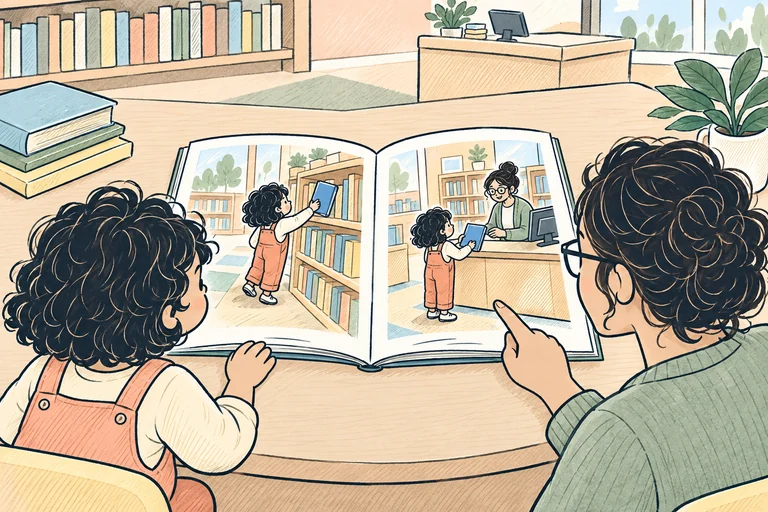
Story idea: My First Visit to the School Library
A step-by-step story about meeting the librarian, choosing a book, and knowing who to ask for help.
Group or class
One shared story. Different voices learning together.
Create one shared story for a small group or the whole class. Explore friendship, cooperation, belonging, and empathy through characters and situations children can discuss together.
Co-learn
Socialise
Empathy
Start with
A shared experience, group discussion, or social-emotional learning theme.
Choose it for
Small-group reading, whole-class read-alouds, friendship stories, sharing, and taking turns.
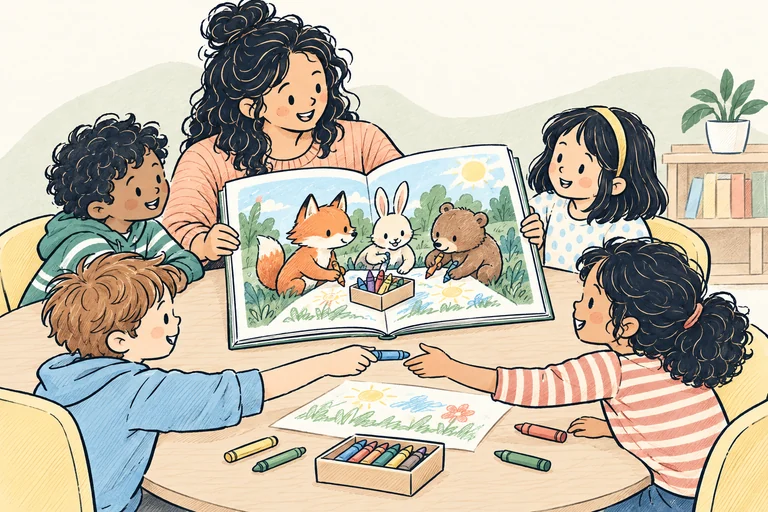
Story idea: One Box of Crayons, Many Ideas
A group of animal friends find a way to share their materials while making a picture together.
Class topic
One teaching idea. A whole world to discover.
Create an educational or imaginative book around a teacher-selected topic. Turn science, nature, numbers, vocabulary, or a class question into an illustrated learning story.
Learn
Discover
Understand
Start with
A topic, learning goal, or question you want your students to explore.
Choose it for
Kindergarten storybooks, primary school reading books, topic-based early readers, and imaginative adventures.
Story idea: The Seed That Reached for the Sun
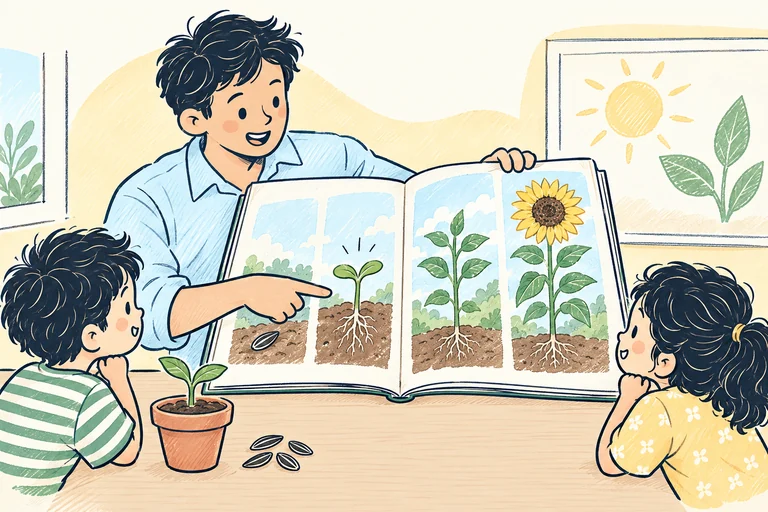
A classroom storybook that follows a sunflower from seed to flowering plant, introducing key vocabulary along the way.
Choose by purpose, not class size alone. A story for one learner starts with
that student's situation. A shared story starts with the group's experience.
A topic book starts with the idea you want to teach, even when the whole class will read it.
These are planned creation paths; the examples are story ideas, not finished products.
Story ideas from everyday classroom life
Use a moment you recognize or a question your students are asking. These starting points connect each book type to a different classroom purpose.
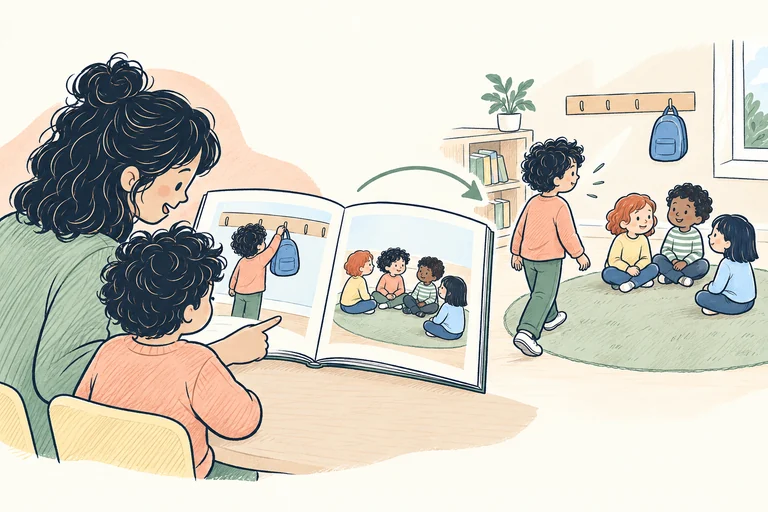
A new classroom routine
Plan a personalized social narrative about arriving at school, finding a place for belongings, and knowing what happens next.
Individual student
Asking for help
Use a familiar classroom situation to explore ways a student can ask for help, including words, gestures, or their usual communication support.
Individual student
Getting ready for a change
Explain a new teacher, a library visit, or a field trip with clear, respectful language and details you have checked.
Individual student
Sharing and taking turns
Create a shared story about a small group working with the same materials. Leave room to discuss different needs and possible solutions.
Group or class
Friendship and belonging
Explore welcoming someone new through a whole-class read-aloud, invented characters, and questions about kindness and empathy.
Group or class
Learning together
Build a small-group reading story around a joint project, with different characters contributing ideas, noticing problems, and listening.
Group or class
Science and nature stories
Follow a seed, explore a habitat, or imagine a journey through the solar system. Connect the adventure to a teacher-selected learning goal.
Class topic
Early readers and vocabulary
Plan kindergarten storybooks and primary school reading books around familiar words, short sentences, and a clear topic. Review the reading demands yourself.
Class topic
Numbers and imaginative worlds
Turn counting, shapes, weather, or a class question into an educational story. Use an imaginary setting while checking every factual explanation.
Class topic
One tiny seed. A whole lesson to explore.
A Class topic book can begin with a simple question: what happens after we plant a sunflower seed? Here is an illustrative planning example, not an exported Occibo book.
Book type
Class topic
Readers
Kindergarten or early primary, read together
Learning goal
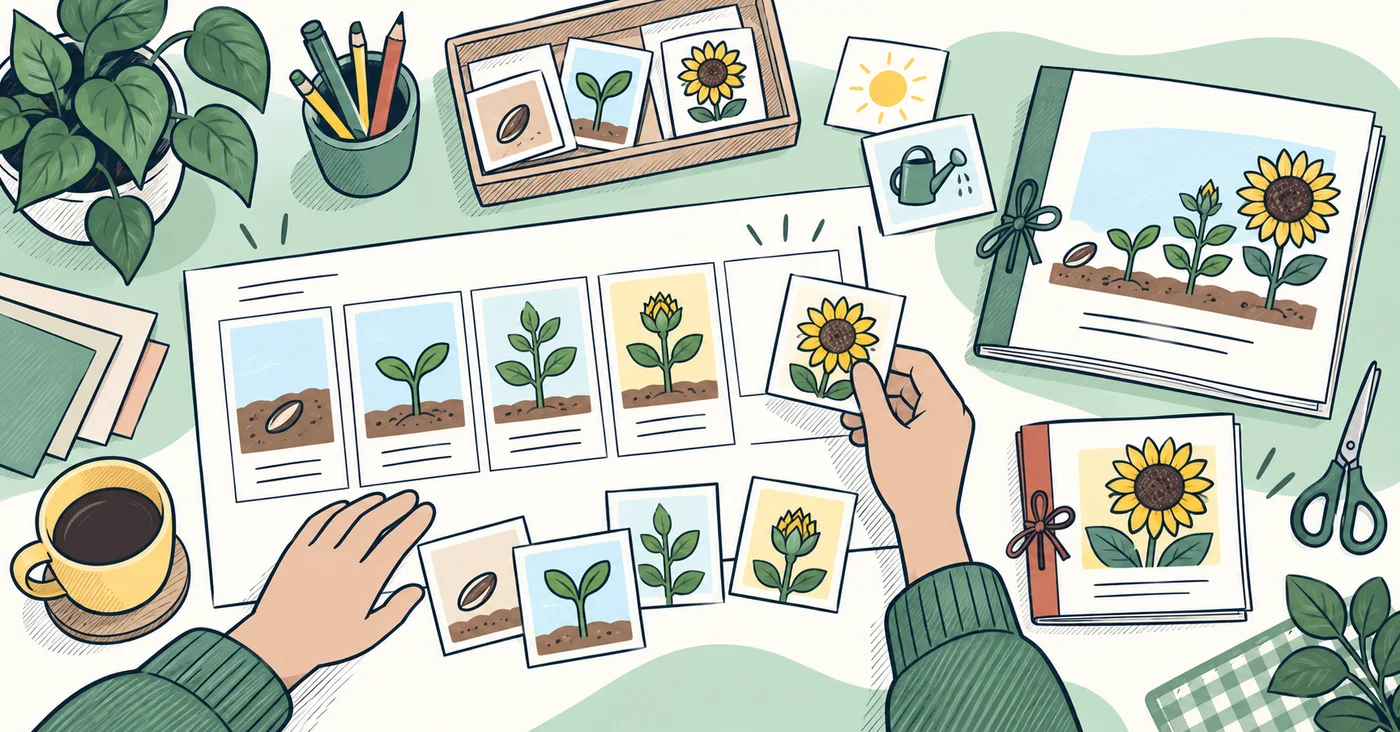
Describe a sunflower's growth in sequence
Words to explore
Seed, root, shoot, leaf, flower
Plan the sequence, then choose words and pictures that explain it.
Start with a seed
“We plant a sunflower seed in the soil. We water it and wait.”
Picture direction: the same pot, a seed, and a small watering can.
Notice a change
“A root grows down. A green shoot grows up toward the light.”
Picture direction: a cutaway view that clearly separates the root and shoot.
Keep watching
“Over time, our plant grows taller. Leaves open. Later, a flower blooms.”
Picture direction: a sequence showing growth over time, not overnight.
Teacher review: check the science, explain the passage of time, and adjust vocabulary for your readers. These excerpts are a starting point for discussion, not a complete lesson plan.
From a classroom need to pages you have reviewed
A planned, guided workflow for classroom book creation. AI supports the drafting and visual work; you set the purpose and make the final decisions.
Start with Individual student, Group or class, or Class topic. Decide whether the story begins with a learner, a shared experience, or a teaching idea.
02
Set the purpose and reading needs
Define the situation or learning goal, age group, vocabulary, sentence length, and whether you will read together or invite independent reading.
03
Shape the story and characters
Plan familiar settings or imaginary worlds. Use fictional characters where personal student details are unnecessary.
04
Review the visual direction
Check that illustrations explain the text, characters stay recognizable, and each scene makes sense for the students who will read it.
05
Edit the language and pages
Refine the wording, sequence, page layout, and factual details. Read the draft aloud and adjust anything that does not fit your classroom.
06
Complete your classroom review
Approve the story for its intended readers before use. Print preparation is planned; final export formats, printing options, and pricing are not yet confirmed.
You know your students. You stay in control.
More than a prompt and an instant story. Occibo's planned teacher workflow connects the story, visual direction, and page review around your classroom purpose.
Social narratives and educational stories need thoughtful review. They are not a promise of behavioral change, clinical suitability, or learning outcomes.
Reading level is a teaching decision
Choose vocabulary and sentence patterns for your readers. Check the draft yourself; simpler language is not proof of a validated reading level or a decodable text.
The story should explain, not judge
Respect different perspectives, communication styles, and sensory needs. Avoid shaming language or promises about how a student will feel or behave.
Keep student details to a minimum
Use invented names and characters when possible. Follow your school policies and applicable consent requirements before using personal information.
Check accuracy and suitability
Review learning content, illustrations, representation, and classroom context. AI assistance does not replace educator judgment or specialist review where needed.
Book types, social narratives, reading needs, and what is planned for Occibo's teacher experience.
What types of books can teachers create with Occibo?
The planned teacher experience offers three book types. Individual student starts with one learner and a routine, situation, change, or social skill. Group or class creates a shared story for a small group or whole class. Class topic creates an educational or imaginative book around a teacher-selected subject. Occibo is in development and accepts early-access waitlist registrations.
How is Group or class different from Class topic?
Choose Group or class when the shared experience is the starting point, such as friendship, cooperation, or taking turns. Choose Class topic when the subject or learning goal leads the book, such as a sunflower life cycle, counting, or space. A Class topic book can still be read by the whole class.
Is Occibo an AI social story generator for teachers?
Occibo is being developed as a guided AI classroom storybook maker, not an instant social story generator. The Individual student path is intended for personalized social narratives about routines, changes, and everyday skills. Teachers review the language, situation, illustrations, and pages before use. The studio is not yet generally available.
Can teachers create kindergarten storybooks and early readers?
Kindergarten storybooks, primary school classroom books, and topic-based early readers are part of the planned teacher workflow. Teachers choose the learning goal and review vocabulary, sentence length, repetition, and visual clarity. Occibo does not currently promise certified reading levels, phonics-sequence alignment, or automatically decodable books.
Can I plan social-emotional learning stories for a class?
Yes. The Group or class path is designed for shared stories about friendship, empathy, cooperation, and belonging. These themes can provide a starting point for discussion and shared reading. They are not a guarantee of learning or behavioral outcomes, or a claim of alignment with a particular SEL framework.
Are these stories suitable for autistic students or IEP goals?
Suitability depends on the individual learner, their context, and the judgment of their educators and relevant specialists. Occibo does not claim clinical validation, automatic IEP alignment, or compliance with Carol Gray's Social Stories criteria. A classroom social narrative is not automatically a formal Social Story or a substitute for individualized support.
Do I need to include real student names or personal details?
No. You can plan stories using fictional characters and only the context needed to explain the topic or situation. Follow your school policies and applicable consent requirements for any student information. Detailed studio data-handling arrangements should be checked when the product becomes available.
Will I be able to print or download classroom books?
Print preparation is part of the planned direction, but downloadable PDF support, final export formats, printing options, pricing, and delivery details have not been announced. The website currently offers an early-access waitlist, not a working book generator or book-ordering service.
Start with your students. Imagine their next book.
Join the early-access waitlist for Occibo's planned teacher experience: Individual student, Group or class, and Class topic books.